
Your Certification Program Is Growing Internationally. Is Your Localization Strategy Ready?


As certification programs expand globally, managing multilingual content becomes more than a translation challenge. Organizations need scalable localization systems that ensure consistency across exams, study guides, training materials, websites, and member communications. Tools like Translation Memory, approved glossaries, quality assurance processes, and subject matter expert review help reduce risk, control costs, and maintain a consistent experience for international audiences. The goal is not just translating content, but building a localization strategy that can support long-term global growth.
Most certification organizations don’t start with a localization strategy. They start with a single translated exam. A trusted reviewer. A handful of international candidates. Perhaps a foreign affiliate or strategic partner requesting materials in another language.
Then growth happens.
A second language is added. Then a third. Study guides require translation. Training programs need localization. Membership communications must reach a broader audience. International demand continues to grow.
At some point, organizations realize they’re no longer managing translation projects.
They’re managing a global content ecosystem.
The challenge isn’t simply translating content anymore. The challenge is ensuring that certification exams, educational products, websites, training materials, and member communications remain accurate, consistent, and scalable across every language.
As one language access leader put it:
“We needed a localization partner that would translate our extensive materials and ongoing communications, but who was also willing to teach us about localization… Since 2018, Interpro has been our only translation partner, transforming our team into subject matter experts.” — Jee Kim, SEIU 775 Benefits Group
Organizations that recognize this shift early are often better positioned to scale globally without sacrificing quality, consistency, or stakeholder trust.
How Do You Know When Your Localization Process Has Reached Its Limit?
Many organizations assume their localization challenges stem from a lack of translation resources.
In reality, the root problem is often a lack of localization infrastructure.
Common warning signs include:
- Multiple reviewers providing conflicting feedback
- Inconsistent terminology across content types
- Longer review cycles
- Growing concerns about translation quality
- Difficulty onboarding new languages
- Repeated requests to revise previously approved content
When educational materials, certification exams, study guides, websites, and member communications are translated independently, inconsistency becomes difficult to avoid.
One marketing leader described the impact of implementing a more systematic approach:
“With tools like Translation Memory, they’ve been able to build a library of words and phrases to deliver fast and consistent results each and every time.” — Zac Wand, Ergodyne
Translation Memory, terminology governance, and glossary development often become critical as organizations grow and attempt to maintain consistency across hundreds or thousands of multilingual assets. Organizations like SEIU 775 Benefits Group have implemented Translation Memory and glossary development programs specifically to maintain consistency across large-scale training, communication, and educational ecosystems.
Why Certification Programs Face Greater Risk Than Traditional Marketing Content
A marketing brochure can usually survive a minor wording change.
A certification exam often cannot.
Certification organizations operate in a high-stakes environment where language directly influences:
- Candidate understanding
- Exam validity
- Certification credibility
- Learning outcomes
- Brand reputation
Scientific terminology, technical concepts, and competency-based testing require a different level of precision than most marketing materials.
This is why certification organizations should view translation as a quality assurance challenge rather than simply a language challenge.
A certification executive explained:
“One of the main reasons I chose Interpro was their clear understanding of the complexities of the Spanish language and variances based on geographic location. It was important to me to have the exam translated specifically to the Spanish used in Puerto Rico today.” — Matissa Sammons, National Commission on Correctional Health Care (NCCHC)
For certification organizations, selecting the correct language variant, maintaining terminology consistency, and supporting subject-matter expertise are not optional considerations. They are foundational requirements.
The Hidden Localization Problem Most Organizations Don’t See Coming
One of the most common challenges facing growing certification programs is terminology drift.
It starts innocently.
A key term gets translated one way in an exam.
A different translator handles the study guide.
A reviewer updates website copy.
An instructor modifies course materials.
Over time, multiple versions of the same concept begin appearing throughout the organization’s content ecosystem.
The consequences can be significant:
- Candidate confusion
- Longer review cycles
- Increased translation costs
- Reduced stakeholder confidence
- Inconsistent learner experiences
This is why mature multilingual organizations invest in translation memory, approved terminology databases, and glossary development programs.
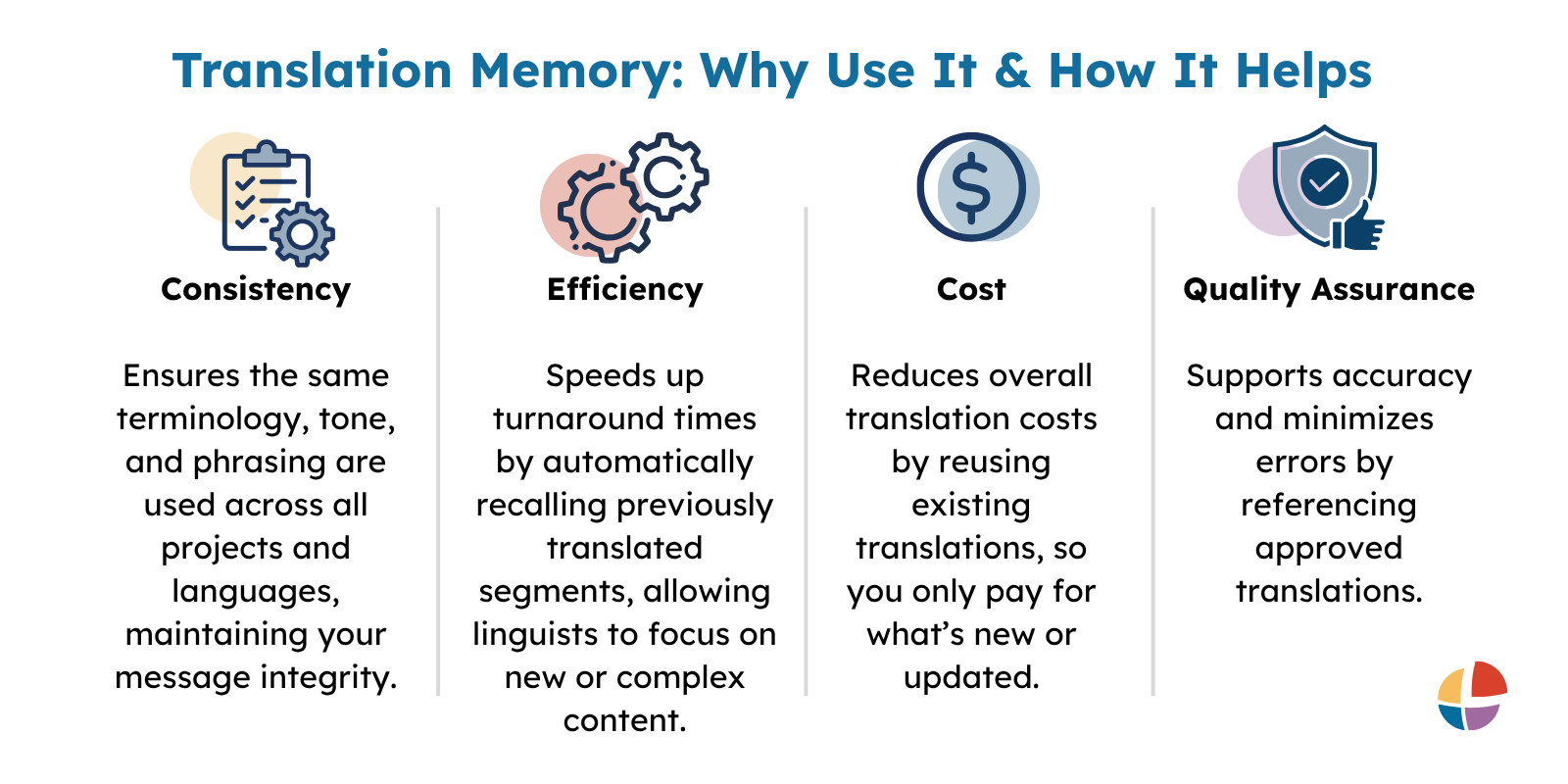
Translation Memory helps growing certification programs maintain consistency while reducing costs and turnaround times.
“Over the years, Interpro’s project managers and file preparation experts have taught us how to best manage our translation memory, which has resulted in considerable cost savings for us.” — Amber Deacon, solidThinking
When terminology is managed strategically, educational materials, certification exams, websites, member communications, and training programs reinforce each other instead of competing with one another.
Why Volunteer Reviewers Are Valuable but Shouldn’t Carry the Entire Process
Many associations and certification bodies rely on volunteer SMEs, affiliate reviewers, and member experts.
These individuals provide tremendous value.
Their expertise helps validate language choices, terminology preferences, and industry-specific concepts.
However, asking volunteers to manage translation workflows, establish terminology governance, or build localization infrastructure often creates unnecessary burdens.
The most successful organizations allow internal reviewers to do what they do best: review and validate.
The localization system itself should do the heavy lifting.
As one client noted:
“Interpro was responsive and willing to collaborate with our review team to ensure translated material met the needs of our program leaders and participants.” — Suzanne Robinson, National Alliance on Mental Illness (NAMI)
The most effective localization programs combine professional localization workflows with internal subject-matter expertise.
Organizations don’t have to choose one or the other.
The strongest programs leverage both.
The Certification Localization Maturity Model
Most organizations progress through several stages of localization maturity.
Stage 1: Single Language Expansion
A certification exam or critical document is translated into one additional language.
The focus is execution.
Stage 2: Multiple Language Growth
Additional languages are introduced.
Translation consistency becomes increasingly important.
Translation Memory and terminology management begin providing measurable value.
Stage 3: Educational Ecosystem Expansion
Organizations expand localization efforts to:
- Study guides
- Practice exams
- eLearning courses
- Continuing education programs
- Training videos
Localization becomes operational rather than project-based.
Stage 4: Global Member Experience
Localization extends beyond educational content into:
- Websites
- Member communications
- Events
- Marketing materials
- Member engagement initiatives
Organizations develop integrated multilingual ecosystems rather than isolated translated assets.
For many associations, this evolution fundamentally changes the role localization plays within the organization.
As International Carwash Association CEO Eric Wulf noted:
“Interpro Translation Solutions has become an important part of our communications efforts.”
Educational Products Are Often the Next Bottleneck
Many certification organizations focus initially on exam translation.
Then reality sets in.
Candidates also need:
- Study guides
- Practice materials
- Online learning
- Continuing education
- Training videos
- Instructor resources
Suddenly, localization extends far beyond the exam itself.
One of the most compelling examples comes from d’Vinci Interactive, a provider of custom learning solutions.
Describing their previous localization process, Director of Learning Experience Jenny Fedullo said:
“A few years back, translating our courses was a clunky process. Our previous vendor relied on Word docs, and once we got those back, our team had to spend a lot of time rebuilding the courses internally. In 2017, we started exploring a new approach with Interpro and quickly saw the difference. They work directly within our authoring tools and offer a true turnkey solution. Now, they’re our go-to for all things localization. Interpro has taken what used to be a heavy lift and made it seamless. They’re not just a vendor—they’re a true partner.
For certification organizations, educational content often becomes the largest localization challenge, not because it is difficult to translate, but because it exists in multiple formats, platforms, and media types simultaneously.
Website Localization and Member Engagement Matter More Than Ever
Even organizations that successfully localize certification programs often discover another obstacle:
Their website remains English-only.
The result is a disconnected user experience.
Candidates may encounter localized certification materials while still navigating websites, resources, or membership information in English.
Organizations pursuing international growth should evaluate the complete learner and member journey, not simply isolated content assets.
As Benjamin Kleiman of LA-CO Industries explained:
“Their attention to detail allowed us to deliver a 5-language interactive website on time and with great accuracy.”
Website localization, multilingual SEO, and localized member communications can help organizations create more cohesive international experiences that align with their global growth goals.
What Does a Mature Localization Program Look Like?
Eventually, organizations stop purchasing individual translation projects.
Instead, they develop repeatable localization systems.
These systems typically include:
- Translation Memory
- Approved glossaries
- Documented review workflows
- Quality assurance procedures
- Stakeholder governance
- Localization strategy
- Scalable multilingual processes
The goal is not simply to translate more content.
The goal is to create confidence.
Confidence that every learner, member, candidate, and stakeholder receives information that is accurate, consistent, and aligned with the organization’s standards.
Organizations that invest in this level of maturity often experience stronger long-term outcomes.
As Blue Yonder’s Senior Project Manager Mauricio Espinosa said:
“Since 2002, Interpro has been our main language provider and, as such, they have contributed significantly to Blue Yonder’s major successes in the international markets.”
The Real Question
The question facing certification organizations isn’t:
“Do we need translation services?”
The question is:
“Do we have a localization system capable of supporting international growth?”
Organizations that answer that question proactively are often able to scale certification programs, educational products, member communications, and digital experiences more effectively while reducing risk, improving consistency, and building confidence among global audiences.
A strong localization strategy doesn’t simply support growth.
It helps organizations grow with confidence.
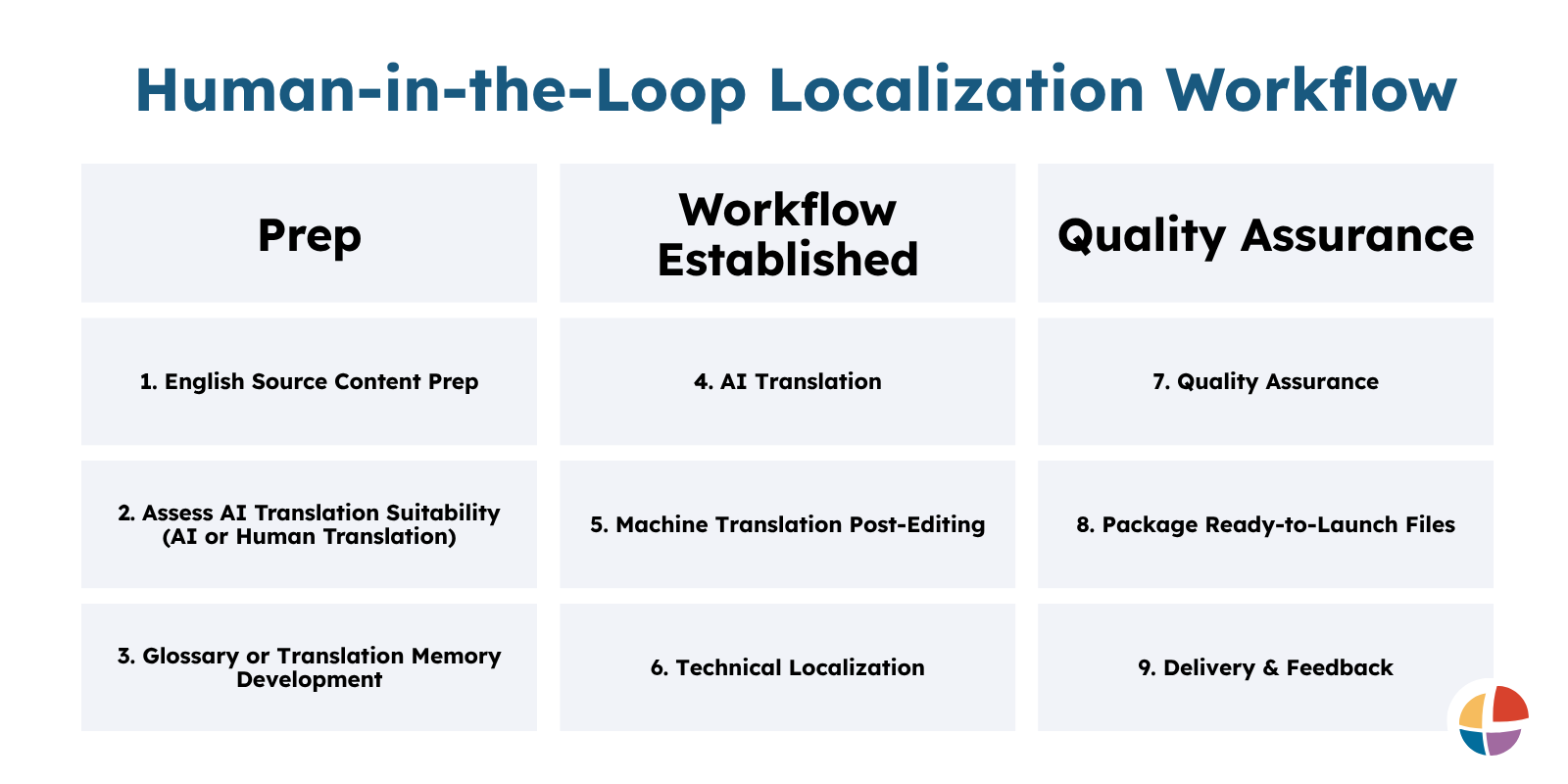
A structured localization workflow helps certification organizations balance quality, consistency, and scalability.
Inside the guide:
- How to determine whether content is suitable for AI translation
- When MTPE is appropriate and when it is not
- The role of terminology management, glossaries, and Translation Memory
- Common mistakes organizations make when implementing AI translation
- Practical governance recommendations for learning, compliance, HR, and communications teams
- How ISO-aligned workflows reduce localization risk
Subscribe to Interpro Insights and receive practical guidance on AI translation, localization strategy, language access, multilingual communications, and global growth.
Frequently Asked Questions About Certification Translation Services
What are certification translation services?
Certification translation services help organizations accurately translate certification exams, study guides, continuing education materials, training content, and related communications into multiple languages. The goal is to ensure that candidates receive the same information, learning outcomes, and testing experience regardless of language.
Why are certification exams more difficult to translate than marketing materials?
Certification exams require a much higher level of precision because translation errors can affect candidate understanding, testing outcomes, and exam validity. Terminology consistency, language variants, subject matter expertise, and review workflows are often critical components of certification exam translation.
What is terminology drift and why does it matter?
Terminology drift occurs when the same concept is translated differently across exams, study guides, websites, training materials, and member communications. Over time, this can create confusion for candidates, increase review cycles, and reduce confidence in multilingual content. Translation Memory and glossary development help prevent terminology drift.
How can organizations maintain consistency across translated certification content?
Organizations maintain consistency by implementing Translation Memory, approved multilingual glossaries, documented review processes, and terminology governance systems. These tools help ensure that the same concepts are translated consistently across exams, educational products, websites, and member communications.
Should volunteer subject matter experts review translated certification content?
Yes. Volunteer subject matter experts often provide valuable insights into terminology, industry concepts, and audience expectations. However, they are typically most effective when reviewing and validating translations rather than managing localization workflows or translation infrastructure.
When should certification organizations localize educational content in addition to exams?
Organizations should evaluate educational content localization as soon as multilingual candidates need access to study guides, eLearning courses, practice exams, videos, continuing education materials, or instructor resources. Translating exams without supporting educational content often creates a fragmented learner experience.
Is website localization important for certification organizations?
Yes. Many organizations localize certification materials but leave websites, membership resources, and registration information available only in English. Website localization can improve accessibility, support international growth, and create a more consistent experience for candidates and members.
What does a mature localization program look like?
A mature localization program includes Translation Memory, multilingual glossaries, documented review workflows, quality assurance processes, governance standards, and a long-term localization strategy. Rather than managing individual translation projects, organizations operate a scalable multilingual communication system that supports growth while maintaining consistency and quality.
Category: Localization
Service: Translation Services
Don't forget to share this post!



Stay Updated with Interpro
Subscribe to our newsletter for the latest updates and insights in translation and localization.