

Mauricio Serrano draws from his cultural heritage to share his personal perspective of Cinco de Mayo’s historical context, and how it’s authentically celebrated in Mexico.
Cinco de Mayo, or the 5th of May, has a few myths. As someone who celebrates Cinco de Mayo every year, I want to take a moment to share the richness of this holiday, offering insights that go beyond the surface-level understanding often portrayed in mainstream culture. So let’s talk about authentic Mexican culture.
Honoring History: The Real History of Cinco de Mayo
Cinco de May is Not Mexican Independence Day
Contrary to popular belief, it is a myth that Cinco de Mayo is Mexican Independence Day (September 16th). Instead, Cinco de Mayo commemorates the Mexican Army’s victory over French forces at the Battle of Puebla in 1862 during the Franco-Mexican War. While it’s not a national holiday in Mexico, it holds special significance in the state of Puebla, where the battle took place. There, celebrations can last for weeks and include a wide array of cultural and military festivities.
Mexican Independence Day is widely celebrated across Mexico and by Mexican communities in the U.S. Festivities include fireworks, community-wide gatherings, and a traditional shout of patriotism known as “El Grito.”
These holidays serve different purposes but share a common thread: pride in heritage and a reminder of the resilience that defines the Mexican spirit.
Cinco de Mayo is a Celebration (and not a drinking fest)
Too often, Cinco de Mayo is misrepresented in the United States, where it has become more associated with parties than heritage. The holiday gained this reputation after its prominence in the U.S. during the Chicano Movement of the 1960s and 70s, a pivotal social and political effort to empower Mexican Americans and elevate cultural pride. But it’s important to remember that Cinco de Mayo is about family, friends, food, and celebration.
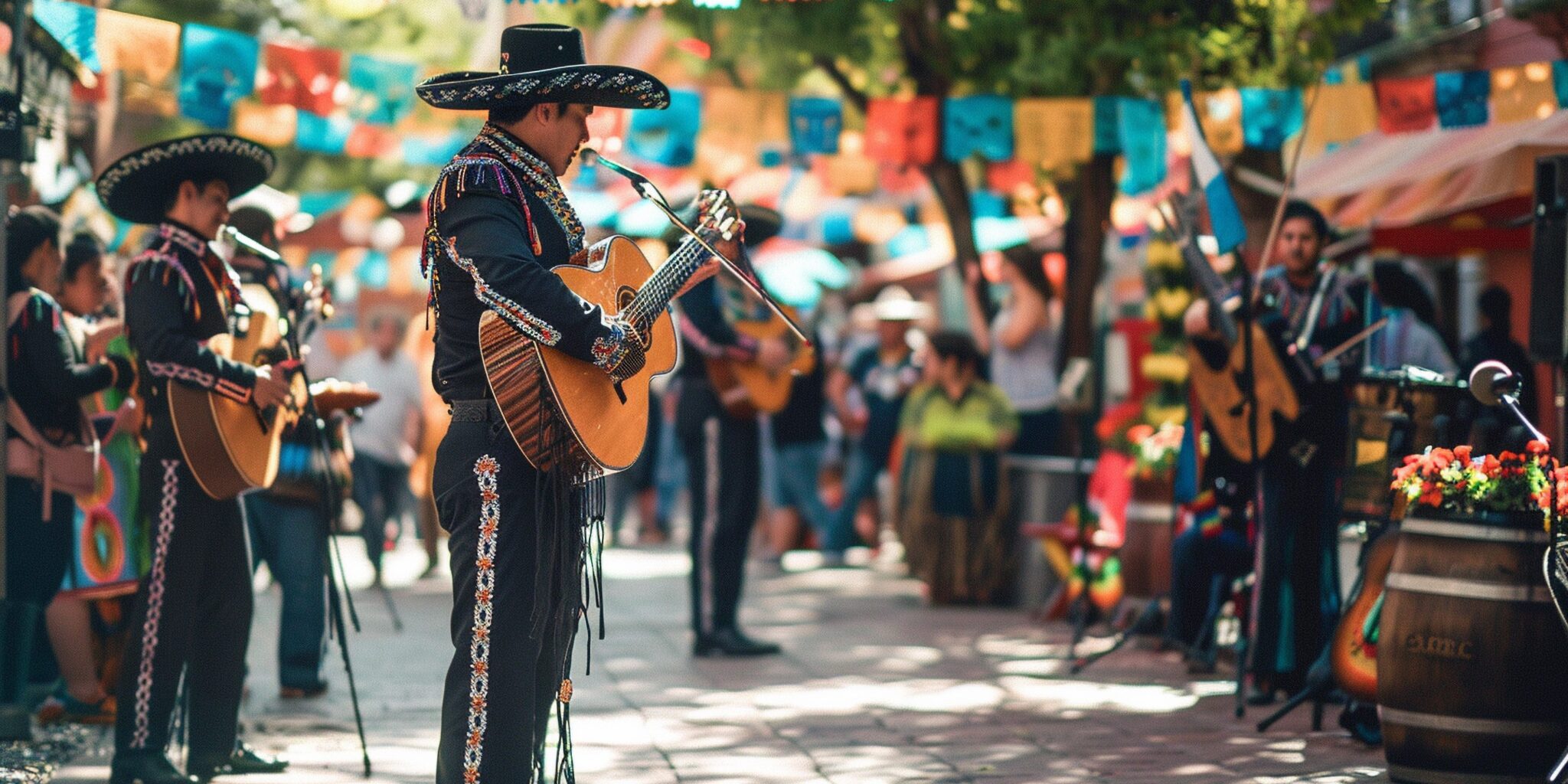
A mariachi band performs during a vibrant Cinco de Mayo street celebration decorated with traditional papel picado banners.
How Mexico Celebrates Cinco de Mayo
Cinco de Mayo is mainly observed in the state of Puebla, where the battle of Puebla took place.
In Puebla, Cinco de Mayo is a significant event that showcases the region’s rich cultural tapestry. Celebrations include a military parade that features musicians, soldiers, sailors, dancers, and traditional figures like Charros and Escaramuzas (Mexican cowboys and cowgirls). Food, too, plays a central role, with traditional dishes such as mole, tacos, and borrachitos (tequila or rum-soaked sweets rolled in sugar) taking center stage.
Mole, in particular, is a very popular dish. The recipe varies significantly by region. For instance, some areas use pasilla and guajillo peppers, while in Puebla, chocolate is added for a slightly sweeter flavor. Mole is not quite a soup or a stew. It’s thicker, and typically served with chicken and rice. One of my favorite places that showcases mole in all its variety is “Nuevo Rebozo,” a restaurant in Oak Park, Illinois, known for offering over 10 types, including sunflower seed and chocolate moles. The sauces’ colors reflect their ingredients, making the dish both a visual and culinary delight.
The U.S. Take: From Mexican Pride to Mainstream Parties
In the United States, Cinco de Mayo evolved from a celebration of cultural identity to a more commercialized event marked by parades, drink specials, and festivities. Initially concentrated in Western states like California, the holiday gradually spread eastward. Cities like Chicago have hosted vibrant parades, particularly in neighborhoods such as Little Village.

Mauricio Serrano, Office Manager at Interpro, shares his perspective on Cinco de Mayo in this featured blog image.
A Culinary Tour: The Menu and Its Meanings
Mexican cuisine is deeply tied to celebration, and Cinco de Mayo is no exception. Here are some dishes that are commonly enjoyed:
- Mole Enchiladas – showcasing the depth of flavor unique to mole sauces.
- Tamales – masa-based treats wrapped in corn husks and steamed to perfection.
- Posole – a hominy-based soup often served with pork and garnished with shredded cabbage, radishes, lime, and oregano.
- Flautas – tightly rolled and fried tortillas filled with meat or cheese.
- Ceviche – a fresh, light dish of marinated seafood, perfect for warmer months.
- Aguachiles – shrimp marinated in lime juice with Serrano peppers, ideal for spice lovers.
Every dish tells a story of regional diversity, family traditions, and the love of shared meals.
Speaking the Language of Celebration
A few Spanish phrases that are commonly used during celebrations include:
- Feliz Cinco de Mayo – Happy 5th of May
- Gracias – Thank you
- A comer – Let’s eat
- Buen provecho – Enjoy your meal
Language is a powerful connector. These expressions, while simple, are bridges to more meaningful exchanges.
Why This Matters
As someone who has lived this culture, I see firsthand how language and cultural nuance play a critical role in effective communication. At Interpro, we understand that translation isn’t just about converting words. It’s about conveying meaning, emotion, and cultural context. This cultural awareness drives how we support our clients across industries, from non- profits and healthcare to manufacturing and unions.
We are not just your translation provider. When you need a cultural consultant and partner, we’re ready to help you get started.
Cinco de Mayo is more than just a date on the calendar. It’s an opportunity to recognize history, celebrate resilience, and build cross-cultural understanding.
¡Buen provecho!
Category: Culture

Don't forget to share this post!




Stay Updated with Interpro
Subscribe to our newsletter for the latest updates and insights in translation and localization.