

What is Internal Client Review?
Internal client review (ICR) can be a critical step in the localization process, but without the right set-up, it can create delays and frustration. This blog explores how to streamline ICR to avoid bottlenecks and ensure better outcomes.
Internal client review (ICR) refers to the process of having a client-side reviewer, typically a native speaker familiar with the organization and its market, evaluate localized content before it is approved and finalized. “Client” refers to you – what does your team review and validate after your translators complete localization?
This step ensures that translations align with brand voice, terminology, and local market expectations. ICRs act as a quality control layer that verifies incoming translations from any source, whether you use one agency or thirty. The review process enables consistency across vendors, languages, and content types.
At Interpro, ICRs are reported back to our team for feedback and improvement. However, not all companies conduct ICRs or report their ICR back to the translator. If you need help setting up an ICR process, Interpro can help.
Who Should Conduct ICR?
Ideal ICR reviewers:
- Are fluent in the source and target languages.
- Understand your brand, product(s), and market context.
- Are internal stakeholders or trusted external reviewers authorized to approve content?
This might seem simple at first, but aligning perspective across global teams can be difficult. Reviewers might be local marketing managers, product experts, or compliance officers – all with subjective feedback and objective goals. The key is establishing a system that enables them to contribute effectively without adding administrative burden.
How Can We Ensure Reviewers Aren’t Overwhelmed?
Reviewer burnout is real, especially when ICR responsibilities are added on top of full-time roles. Prevent this by:
- Setting clear expectations: Use reviewer briefs to define scope, timelines, and review priorities.
- Limiting review volume: Break projects into digestible units.
- Implementing smart tools: Use platforms with real-time commenting, version tracking, and in-context preview.

A localization specialist reviewing translated content and managing internal client review feedback within a translation workflow.
Interpro helps clients deploy tools that reduce manual effort and streamline the reviewer experience.
How Do We Handle Conflicting Feedback?
Multiple reviewers can create chaos if there’s no clear process. To manage this:
- Define roles and hierarchy: Identify who gives input vs. who makes final decisions.
- Centralize feedback: Consolidate comments in a shared platform.
- Maintain reference materials: Enforce glossary, tone, and style adherence.
Interpro’s workflows resolve feedback conflicts by combining linguistic best practices with cultural insight.
How Does ICR Affect Timelines and Cost?
ICR can influence both timeline and budget:
- Delays from reviewer unavailability or unclear scope
- Increased cost from multiple review rounds or excessive edits
- Rework due to inconsistent or subjective feedback
- Bottlenecks when feedback is fragmented across channels
- Higher administrative costs if internal tools or workflows are lacking
To minimize impact:
- Include ICR in your project schedule.
- Define the number of review cycles.
- Automate handoffs between reviewers and approvers.
Common Pitfalls and How to Avoid Them
❌ Reviewer burnout and missed deadlines
✅ Solution: Assign tasks in advance, balance volume, and use easy-to-navigate review tools.
❌ Conflicting, unclear, or excessive edits
✅ Solution: Clarify decision-makers, use a style guide, and train reviewers.
❌ Feedback in multiple formats (email, Word, PDF)
✅ Solution: Centralize reviews in one platform with version control.
❌ Lack of stakeholder buy-in or engagement
✅ Solution: Educate internal reviewers on the value and expectations of ICR.
❌ Vendor inconsistency
✅ Solution: Use ICR to apply a single validation layer across all translation providers.
❌ No ownership of final sign-off
✅ Solution: Establish accountability with clear workflow stages.
The Interpro Approach: Internal Review, Done Right
At Interpro, we understand that our clients need reliable systems for validating translation quality, regardless of who produced the work. That’s why we offer two flexible ICR solutions:
- We help you build your internal ICR process. From reviewer training to workflow design and tooling, we’ll help you create a scalable, repeatable system.
- We act as your third-party reviewer. If you receive translations from multiple vendors, Interpro can serve as your centralized quality gatekeeper, ensuring brand, tone, and technical accuracy are upheld.
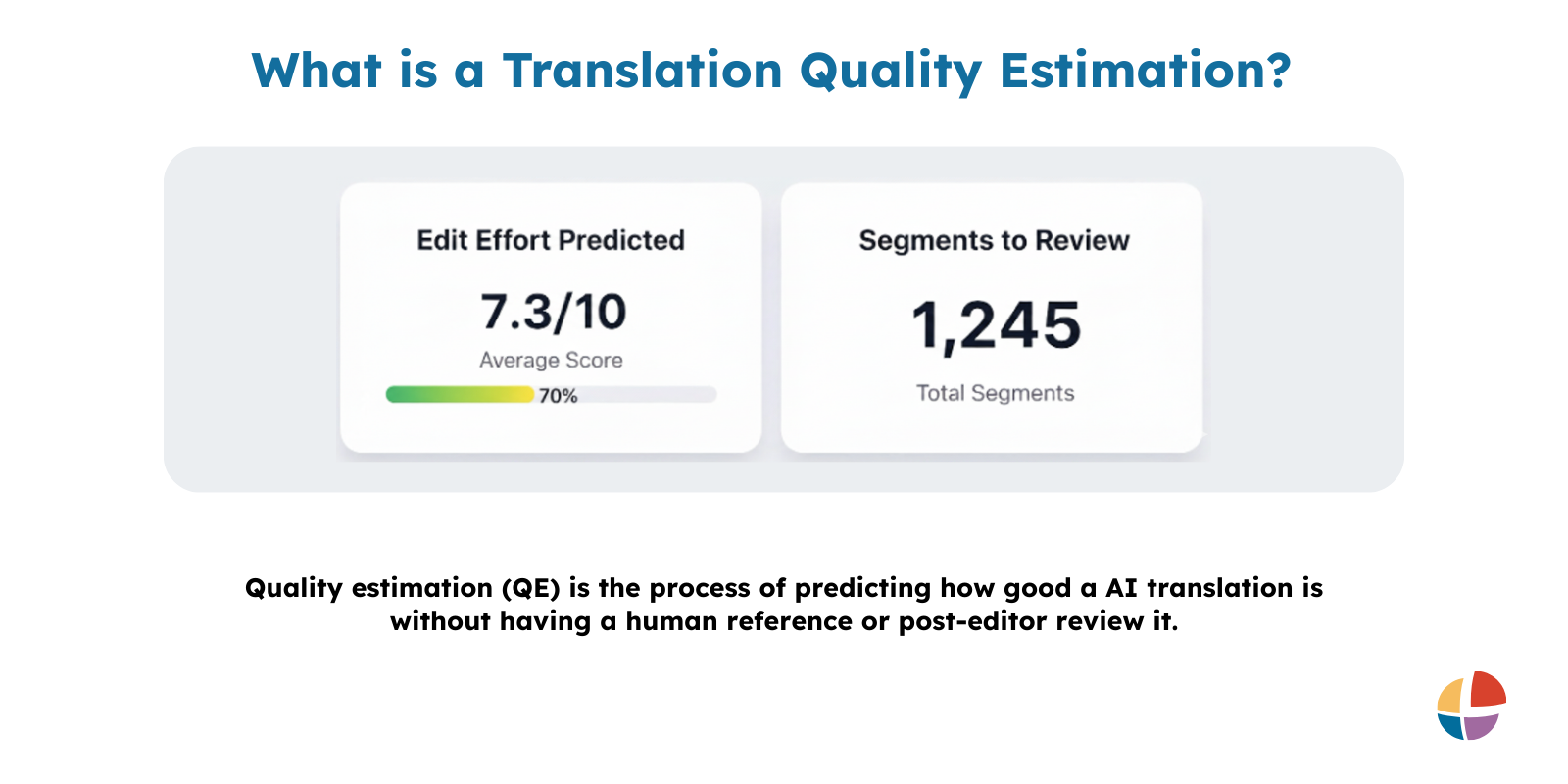
Translation quality estimation dashboard predicting post-editing effort and identifying segments that may require review.
Whether you’re launching global content or ensuring regulatory alignment across markets, our ICR services help you maintain control, consistency, and confidence in every language.
Build Your Custom Localization System with Confidence
Book a consultation to assess the best localization strategy for you.
Interpro helps you evaluate your current localization workflow, identify where AI can be applied safely, and design a Human-in-the-Loop process that protects compliance, quality, and brand integrity.
Whether you need AI translation services, MTPE, full human translation, or strategic localization consulting, we’ll help you build a system that scales without exposing your organization to unnecessary risk.
Category: Localization
Tags: About Interpro
Service: Consulting

Don't forget to share this post!



Stay Updated with Interpro
Subscribe to our newsletter for the latest updates and insights in translation and localization.