

From stadiums to city streets, global events like the World Cup reveal a hard truth: organizations must communicate instantly, clearly, and in dozens of languages, often under pressure. The ones that succeed don’t rely on AI alone or traditional interpreting alone. They build structured, scalable localization systems with the right mix of both. This is where Interpro’s language services come in, as a strategic partner helping teams scale communication without sacrificing accuracy.
The real question here is this: Did AI take jobs from interpreters? The answer might not be as obvious. No one thinks that any host city would be providing interpreters for 50 or 90 languages. They are still hiring interpreters for the languages they know will have large representation, especially if their national team is playing in the city. AI is giving them a way to reach more people in more languages that they probably never thought they would be doing in the first place.
The World Cup Uses AI for Safety Communication
The safety of fans is one of the main concerns for the World Cup organizers. Being able to communicate public safety information to people who might not understand the languages spoken at the host countries. To address this challenge, law enforcement agencies are turning to AI.
The event’s communication challenge: Officers who speak the languages of the teams are deployed to fan marches and along major fan corridors to assist those who might not speak English.
The solution: Local police departments, sheriff’s offices, and transit authorities in Johnson County (Kansas City venue) and the Santa Clara County Sheriff’s Office (San Francisco venue), in major host cities, are deploying a multi-layered infrastructure from Pocketalk. They will be equipped with specialized translation technology embedded in body cameras that will allow them to communicate in more than 50 languages, according to the city’s police commissioner.
It acts as an interpreter in real time.
“Welcome to Kansas City,” A Pocketalk tester said. The device responded, “Bienvenido a Kansas City.”
Here’s how it works: pick the languages, press the button, and speak. You can also translate signs or written text.
This device will be helpful during the World Cup when hundreds of thousands of people from across the world visit our region.
“We are able to communicate with anyone that comes, that needs help,” Officer John Lacy said.
“Once we press that button, it can speak for us,” Lacy said. “If we’re talking to someone with a different language, there’s no barrier now.”
Previously, an officer would have to phone a line and wait for an interpreter. Now, the process is fast-tracked with this device.
“We don’t want anybody to feel that ‘Hey, I don’t speak English; I’m going to be very timid’ or they have to write something down,” Lacy said. “We can communicate right through here, it’s a game changer.”
Can massive events needing global communication really be supported with multilingual communication at scale?
Yes, but not with traditional approaches alone.
The FIFA World Cup provides a real-world stress test for language access strategies. With hundreds of thousands of international visitors, public safety and operational communication depend on delivering accurate information across dozens of languages in real time.
Host cities have begun using AI-powered translation tools embedded in public safety workflows to communicate in 50+ languages instantly, while handheld devices and mobile solutions can support even broader language coverage on demand.
At the same time, human interpreters are still deployed for high-priority languages and sensitive scenarios.
This hybrid model highlights a critical shift:
- Language access is no longer episodic. It’s continuous and real-time
- Communication must scale beyond predictable language needs
- Accuracy is mission-critical, especially for safety and compliance
Organizations across industries such as healthcare, HR, compliance, learning, and communications face the same challenge at scale.
The New Standard: Scalable Global Communication
Massive global audiences require instant, multilingual communication
Large-scale events like the World Cup demonstrate how quickly language requirements expand. Supporting just a handful of languages is no longer sufficient. Organizations must be prepared to scale across dozens as audiences diversify.
For example:
- Emergency alerts must be understood immediately
- Event updates require real-time multilingual delivery
- Customer and public-facing interactions happen simultaneously across languages
This mirrors enterprise challenges such as:
- Multinational workforce communication
- Global product launches
- Compliance-driven training
AI tools are enabling real-time communication at unprecedented levels. In high-traffic global events, teams can instantly translate spoken or written messages across dozens of languages. This represents a major advancement in accessibility.
However, relying on AI alone introduces challenges:
- Inconsistent terminology
- Lack of contextual understanding
- No built-in quality assurance
That is why organizations leverage AI translation services within structured localization systems. Because there needs to be someone managing the process and ensuring the outputs support the strategy.
Other Ways The 2026 World Cup is Using AI to Scale Global Communications
We’re seeing in real time the World Cup use AI for many communication solutions:
Public Safety and Emergency Services
The most critical use of AI translation is happening behind the scenes in local emergency infrastructure. Many host cities are using systems like RapidSOS, which features AI-driven real-time transcription and translation for local 911 dispatch. When an international fan calls for emergency services inside a stadium, the AI instantly detects their native language and translates the call, removing the standard 2-to-3-minute delay required to manually route the call to a human translator.
Team and Tactical Analytics
FIFA’s official technology partner, Lenovo, has deployed Football AI Pro for all 48 participating teams. This generative AI platform uses FIFA’s custom “Football Language” model to ingest complex match analytics and instantly translate those metrics into multi-language text summaries, graphs, and tactical visualizations for coaches and scouts.
Local Event Logistics and Security
Local police departments in several host cities have upgraded their equipment specifically for the tournament. For instance, police forces near venues have deployed upgraded body-worn cameras equipped with AI software that translates up to 56 different languages instantly, allowing officers to communicate effortlessly with international tourists.
Interpro offers modern solutions like remote simultaneous interpretation (RSI) and multilingual web meetings to help organizations scale interpreting and verbal communications alongside their localized materials.
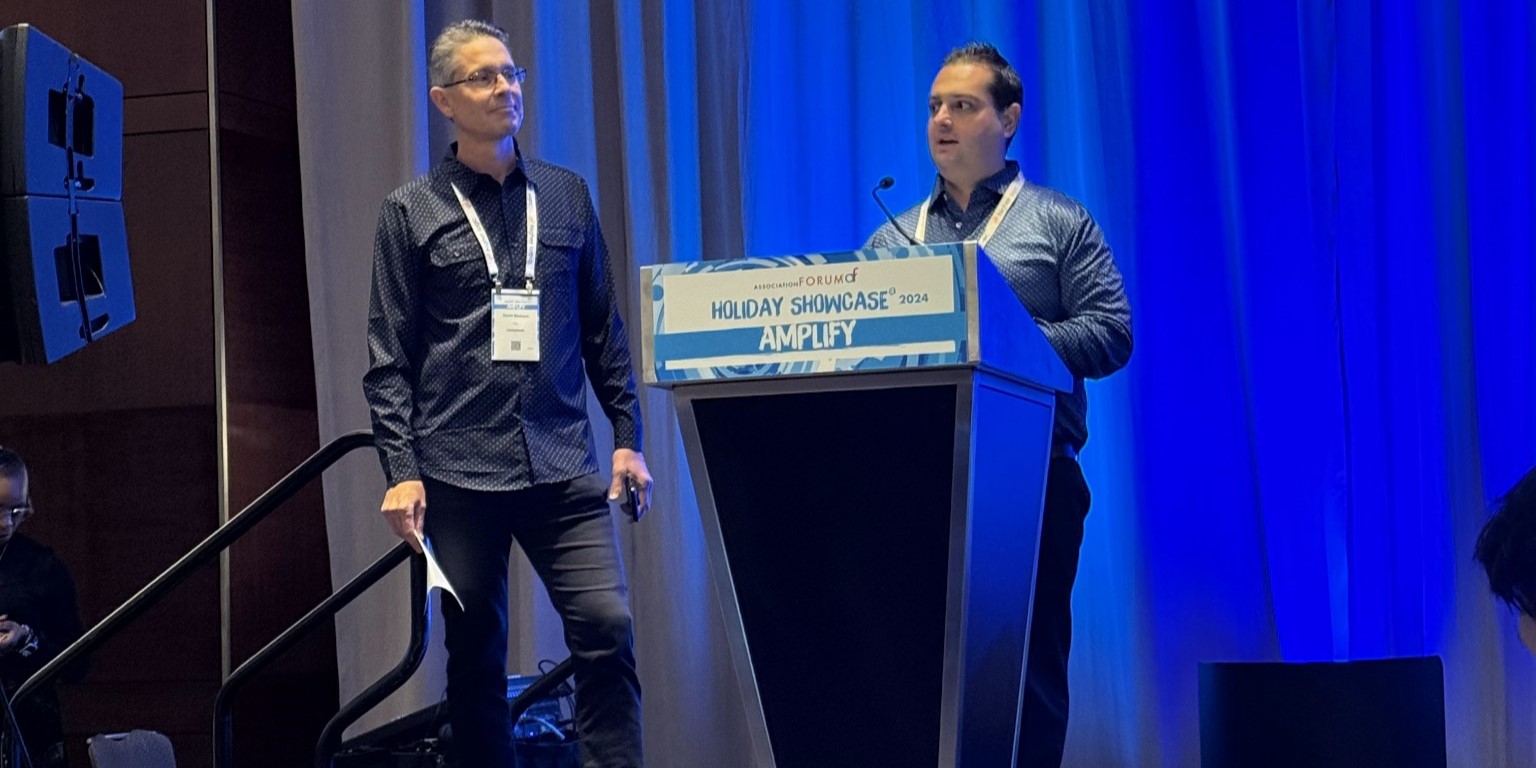
Live events require scalable interpreting solutions like remote simultaneous interpretation to support multilingual audiences in real time.
The Future of Localization is Hybrid: AI + Human Expertise
The takeaway from the World Cup is not that AI replaces interpreters.
It’s that AI expands what is possible, but only when governed by a structured localization strategy.
At Interpro, that means:
- Controlled terminology and glossary management
- Defined workflows for content and interpretation
- Human-in-the-Loop quality assurance
- Strategic technology integration
Through localization consulting services, organizations move beyond ad hoc translation and build scalable, repeatable communication systems.
Real-World Applications Beyond Global Events
The lessons from the World Cup extend directly to enterprise environments:
Corporate Communications
Deliver clear internal messaging globally with document translation solutions.
Training & Workforce Enablement
Ensure consistent learning outcomes using instructor-led multilingual training.
Digital & Web Experiences
Reach international audiences through website translation services.
Multimedia & Video Content
Scale engagement with video translation.
Global Strategy FAQs
What is Human-in-the-Loop AI translation?
Human-in-the-Loop AI translation combines machine translation with human review to ensure contextual accuracy, terminology consistency, and compliance. This approach improves quality while maintaining the speed necessary for large-scale multilingual communication strategies.
Can AI replace human interpreters at large events?
AI cannot fully replace human interpreters. It enables rapid communication across many languages, but human interpreters are essential for complex, high-stakes interactions requiring cultural nuance, accuracy, and real-time decision-making.
Why is localization critical for global communication?
Localization adapts content linguistically and culturally for target audiences, improving understanding and engagement. It helps organizations avoid miscommunication, meet compliance requirements, and deliver consistent experiences across diverse global markets.
How do organizations scale multilingual communication effectively?
Organizations scale by combining AI tools with structured workflows, terminology management, and human oversight. This ensures consistent, accurate communication across large volumes of multilingual content without sacrificing quality.
What role does interpreting play in modern language strategies?
Interpreting enables real-time multilingual communication, especially in live or high-stakes scenarios. Solutions such as remote simultaneous interpretation help organizations scale interpreting services efficiently.
What is the difference between translation and localization?
Translation converts text from one language to another, while localization adapts content for cultural and regional relevance. Learn more in this guide to translation vs localization.
Explore Scalable Language Access Solutions
Learn how Interpro supports global communication through interpreting and AI-powered solutions:
Stay informed on Translation Trends
Subscribe to Interpro’s Newsletter
Book a Consultation
Book a consultation to assess your workflows and identify the right localization model.
Translation & Localization Services | Interpreting Services | AI Services | Consulting Services
Category: Localization
Service: AI Translation

Don't forget to share this post!


Stay Updated with Interpro
Subscribe to our newsletter for the latest updates and insights in translation and localization.