

Expanding your business into multilingual markets requires more than just translating text. This beginner’s guide breaks down the differences between translation and localization, explains which materials to prioritize, and helps you choose the right provider, so you can communicate effectively and confidently across languages.
Expanding into multilingual markets is an exciting opportunity for any business. However, if you’re new to translation, the process can seem overwhelming. How do you ensure accuracy? What’s the difference between translation and localization? Do you need professional services, or can AI handle it?
The team at Interpro has created this guide to help you navigate the translation process and ensure your business materials are effective in any language.
Understanding the Basics: Translation vs. Localization
Translation is the process of converting text from one language to another while maintaining accuracy. Localization goes beyond translation by adapting content culturally, linguistically, and technically for a specific audience.
For example, simply translating a website from English to Spanish isn’t enough; localization ensures the wording, currency, date formats, and cultural nuances are correct.
When to use translation: legal documents, product manuals, reports.
When to use localization: websites, marketing campaigns, eLearning courses.
An important idea to keep in mind is that while translation and localization are distinct concepts, they are still closely related.
What Types of Business Materials Need Translation?
Depending on your industry, you may need translation for:
- Marketing materials – brochures, social media posts, ad campaigns
- Website and eCommerce content – product descriptions, landing pages, SEO content
- eLearning and training materials – employee handbooks, instructional videos, compliance training
- Technical and legal documents – contracts, user manuals, safety guidelines
For example, if your company sells medical devices, your manuals must be translated accurately to meet compliance regulations in different countries.
Should You Use AI Translation or Professional Services?
AI-powered translation tools like Google Translate can help with quick translations, but they aren’t reliable or ethical for professional business use.
When AI-only translation is not recommended:
- Legal and medical documents (errors could be costly)
- Marketing content (machine translation lacks nuance)
- eLearning and technical content (complex industry terms require expertise)
When AI and human editing work together:
- Large technical document translations with Machine Translation Post-Editing (MTPE)
- Internal documents where minor errors won’t cause problems
At Interpro Translation Solutions, we use human translators for accuracy while leveraging Translation Memory (TM) and AI tools to improve efficiency and reduce costs where appropriate.
How to Choose a Translation Partner
Not all translation providers are equal. Here’s what to look for:
- Industry expertise – a company that specializes in your field (e.g., healthcare, legal, eLearning)
- Native-speaking translators – ensures cultural accuracy and clarity
- ISO-certified quality process – guarantees accuracy and consistency
- Turnkey services – a provider that handles design, formatting (DTP), video translation, and more
At Interpro, we offer turnkey solutions, meaning we don’t just translate your materials. We also format them for eLearning platforms, marketing tools, and websites.
The Translation Process: Step-by-Step
Here’s a simple breakdown of how a professional translation project works:
- Project consultation – define goals, target audience, and language needs
- Content extraction and preparation – formatting files for translation
- Translation and editing – native-speaking linguists translate and proofread
- Desktop publishing (DTP) and quality assurance – formatting and final checks
- Final review and delivery – you receive ready-to-use translated materials
For example, if you need employee training materials translated into Spanish and French, Interpro will translate, format, and integrate the content into your eLearning platform, such as Rise 360 or WordPress.
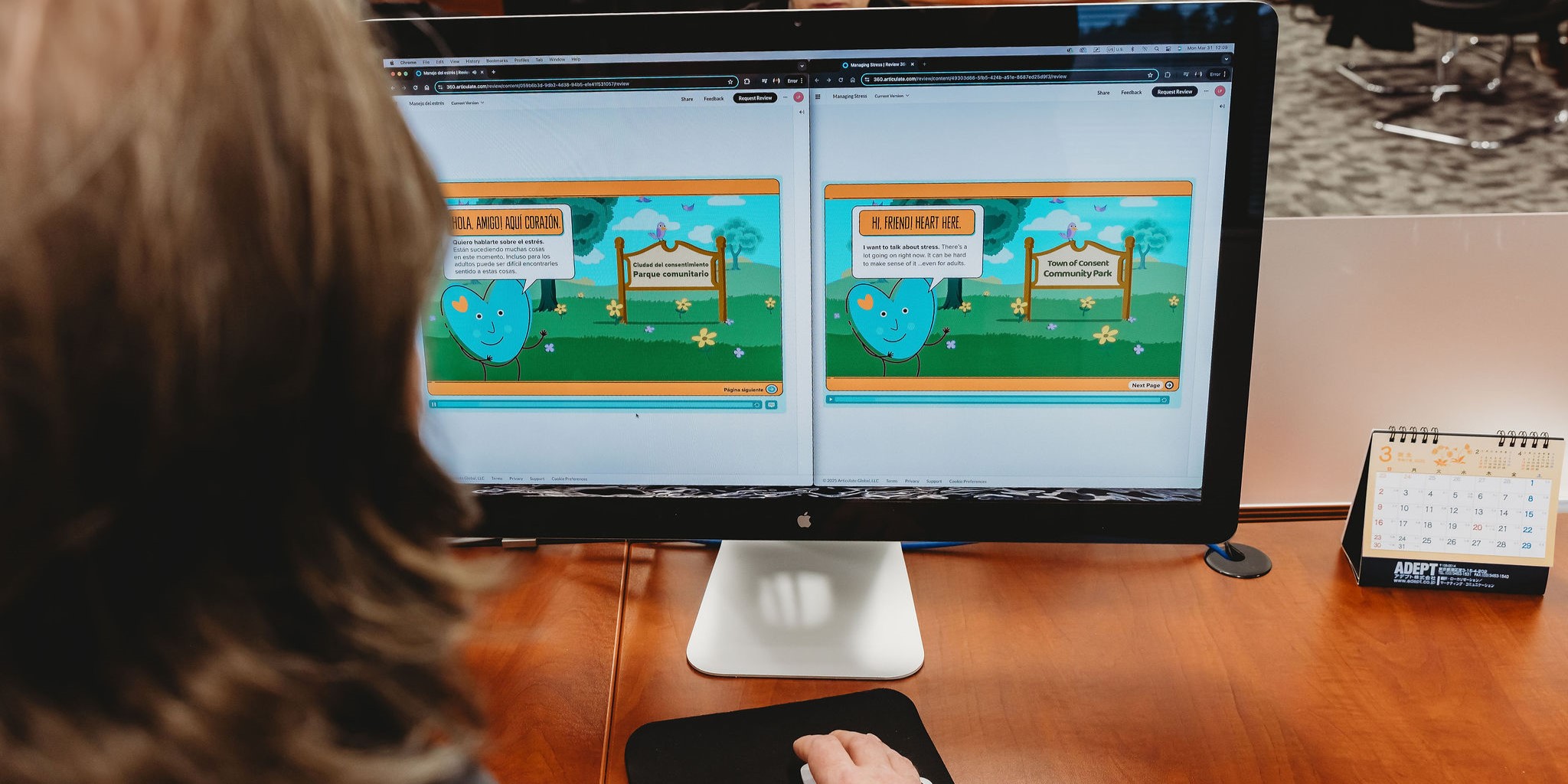
Larry Pilotto, Manager, eLearning and DTP, compares Spanish and English versions of an eLearning module side-by-side to ensure translation accuracy, cultural nuance, and functional consistency as part of Interpro’s localization workflow.
Common Mistakes to Avoid When Translating Business Content
Many translations are subjective, but avoiding localization pitfalls is required for successful internationalization. This is just the beginning of what you should consider when looking for mistakes:
- Ignoring cultural differences, colors, idioms, and humor doesn’t always translate well.
- Not using Translation Memory leads to higher costs and inconsistent terminology.
- Relying on machine translation without human editing can result in embarrassing or legally risky mistakes.
- Forgetting formatting and design, translations often expand or contract in length.
- A marketing tagline in English may not work in Japanese. Instead of a direct translation, localization ensures it resonates with the audience.
Interpro’s global team can help be your translation insurance to avoid localization pitfalls.
How to Make Your Translation Project More Cost-Effective
- Use Translation Memory (TM) – reduces costs by storing repeated phrases
- Prioritize key content – start with high-impact materials
- Plan for future translations – design content with global expansion in mind
For example, if you regularly update HR policies, a TM can reduce costs over time by reusing previously translated content.
Conclusion: Start Your Translation Journey with Confidence
If you’re new to translation, the key is to:
- Understand the distinctions between translation and localization
- Use professional translation services for high-impact content
- Choose a trusted language partner like Interpro to handle complex projects
Need professional translation services for your business? Contact Interpro today.
Explore Services
Consulting • Translation • eLearning • Video & Multimedia • Document
Category: Translation
Tags: About Interpro
Service: AI Translation, Document Translation, Software Translation, Translation Services, Website Translation, eLearning Translation

Don't forget to share this post!



Stay Updated with Interpro
Subscribe to our newsletter for the latest updates and insights in translation and localization.