
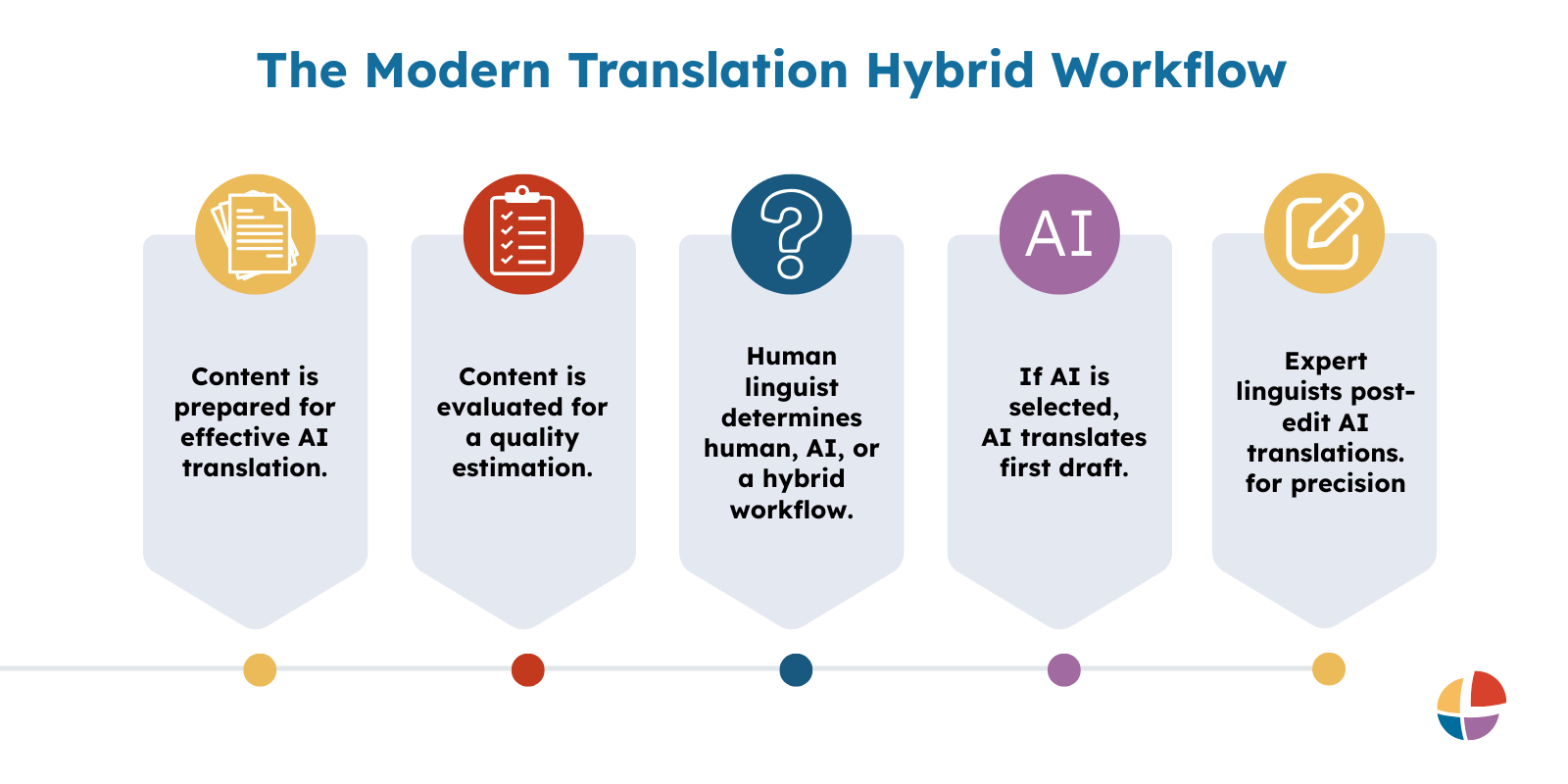
Machine Translation (MT) has transformed the translation landscape, offering faster, more scalable solutions, but it’s not without limitations. This blog explores how MT works, its benefits and challenges, when to use it, and why pairing it with human expertise (MTPE) is key to achieving accurate, culturally nuanced translations that support SEO and global growth.
Understanding the Rise of Machine Translation in Professional Language Services
In an increasingly interconnected world, the demand for swift and accurate language translation services has never been higher. From global businesses expanding into new markets to individuals communicating across borders, the need to bridge linguistic divides is constant.
Traditionally, human translators have been the backbone of this industry, offering nuance, cultural understanding, and precision. However, with the rapid advancements in artificial intelligence, machine translation (MT) has emerged as a powerful tool, revolutionizing how we think about and approach translation. But what exactly is machine translation, and how does it fit into the landscape of professional language services?
This comprehensive article will explore the intricacies of MT, its various types, benefits, limitations, and its evolving role alongside human expertise, all while considering its impact on search engine optimization (SEO), local search (GEO), answer engine optimization (AEO), and search experience optimization (SXO).
What is Machine Translation?
Machine translation (MT) refers to the use of software to translate text or speech from one natural language (the source language) into another (the target language) without human intervention.
Machine translation is a form of AI translation, but not all AI translation is Machine translation.
At its core, MT leverages computational linguistics and artificial intelligence to analyze, interpret, and convert linguistic data. Unlike simple dictionary lookups, modern MT systems attempt to understand the grammatical structure, syntax, and even some semantic meaning of the source text to produce a coherent translation.
The Evolution of Machine Translation
The concept of machine translation dates back to the early days of computing in the 1950s. Early attempts were rudimentary, relying on rule-based systems that struggled with linguistic complexity and ambiguity. The evolution of MT can be broadly categorized into several key phases:
- Rule-Based Machine Translation (RBMT): The earliest form, RBMT, relies on vast dictionaries and manually created linguistic rules (grammar, syntax, semantics) to translate text. While offering predictable results and a certain level of control, RBMT systems are labor-intensive to develop and maintain, and they often struggle with idiomatic expressions and exceptions to rules.
- Statistical Machine Translation (SMT): Emerging in the 1990s, SMT marked a significant leap forward. Instead of explicit rules, SMT systems learn translation patterns by analyzing massive amounts of pre-translated human text (parallel corpora). They calculate the probability of a word or phrase in the source language being translated into a particular word or phrase in the target language. Google Translate’s early iterations were largely based on SMT.
- Neural Machine Translation (NMT): The most recent and significant breakthrough, NMT, gained prominence in the mid-2010s. NMT systems utilize deep learning neural networks to learn the complex mappings between languages. Unlike SMT, NMT translates entire sentences or even paragraphs at once, considering the context of the entire input. This holistic approach results in significantly more fluid, natural-sounding, and accurate translations, often reducing the need for extensive post-editing. NMT is the technology behind most leading modern MT engines.
How Machine Translation Works (Simplified)
While the underlying algorithms are incredibly complex, a simplified view of how MT works involves several layers:
- Encoding: The source language text is fed into an “encoder” neural network, which converts it into a numerical representation (a vector) that captures its meaning.
- Decoding: This numerical representation is then passed to a “decoder” neural network, which generates the translated text in the target language.
- Attention Mechanism: A crucial component, the “attention mechanism,” allows the decoder to focus on specific parts of the input sentence while generating each word of the output, improving accuracy and coherence.
Benefits of Machine Translation for Language Translation Services
MT offers several compelling advantages, particularly when integrated into professional language translation workflows:
- Speed and Efficiency: MT can translate vast volumes of text in a fraction of the time it would take human translators. This can be useful for projects with tight deadlines or for processing large datasets.
- Cost-Effectiveness: For certain content types, especially those with repetitive language or lower sensitivity, MT can significantly reduce translation costs.
- Scalability: Businesses can quickly scale their translation capabilities to meet fluctuating demands without needing to immediately expand their human translation teams.
- Consistency: MT engines can ensure consistent terminology and phrasing across large documents or multiple projects, especially when there are existing glossaries or translation memories in place.
- First Pass for Human Translators (MTPE): Perhaps the most impactful benefit for professional services is the use of MT as a first pass, followed by human post-editing (Machine Translation Post-Editing or MTPE). This process combines the speed of MT with the accuracy and nuance of human review, often leading to faster turnaround times and competitive pricing for clients.
Limitations and Challenges of Machine Translation
Despite its advancements, MT is not a perfect solution and faces several limitations:
- Nuance and Cultural Context: MT struggles with sarcasm, humor, irony, idiomatic expressions, and deeply embedded cultural references. It translates words, but often misses the deeper meaning.
- Accuracy for Specialized Content: While improving, MT can still produce inaccurate translations for highly technical, legal, medical, or creative content where precision and specific terminology are paramount.
- Quality Variability: The quality of MT output can vary significantly depending on the language pair, the complexity of the text, and the training data of the MT engine.
- Lack of Human Intuition: MT cannot understand the subjective intent of the author, adapt to target audience sensitivities, or make editorial decisions that a human translator would.
- Data Privacy and Security: Using public MT engines for sensitive information can raise concerns about data privacy and confidentiality. Professional services often use secure, private MT solutions or ensure data anonymization.
Machine Translation Post-Editing (MTPE): The Human-Machine Synergy
For professional language translation services, MT is rarely used in isolation for high-stakes content. Instead, the paradigm of Machine Translation Post-Editing (MTPE) has become standard. In an MTPE workflow:
- Initial MT Output: The source text is first processed by a machine translation engine.
- Human Post-Editor Review: A professional human translator then meticulously reviews and edits the MT output. This involves correcting errors, improving fluency, ensuring cultural appropriateness, refining terminology, and checking for overall accuracy and readability.
MTPE combines the efficiency of machines with the linguistic expertise, cultural understanding, and critical thinking of human translators. This approach allows language service providers (LSPs) to offer faster turnaround times and more competitive pricing for suitable projects, while still guaranteeing high-quality results.
When to Use and Not Use Machine Translation
Understanding when MT is appropriate is crucial for effective language translation services:
Ideal Use Cases for MT (often with MTPE):
- Large Volumes of Content: User manuals, product descriptions, e-commerce listings, technical documentation.
- Internal Communications: Emails, memos, internal reports, where rapid understanding is prioritized over perfect stylistic fluency.
- Urgent Translations: When speed is the absolute highest priority.
- Repetitive Content: Content with similar phrases and structures, where MT engines can leverage trained data efficiently.
- Information Gathering: Quickly understanding the gist of foreign language documents.
When Human Translation is Essential (or MTPE with extensive post-editing):
- Legal Documents: Contracts, patents, and court documents where a single misinterpretation can have severe consequences.
- Medical and Pharmaceutical Content: Patient information, clinical trials, and regulatory documents demanding absolute accuracy.
- Marketing and Advertising: Slogans, campaigns, creative content where cultural resonance, brand voice, and persuasive language are critical.
- Literary Translation: Books, poetry, where artistic interpretation and conveying emotion are key.
- Highly Sensitive Information: Where data security and nuance are non-negotiable.
Machine Translation and SEO, GEO, AEO
Integrating machine translation into a content strategy, especially for international markets, requires careful consideration of various optimization factors.
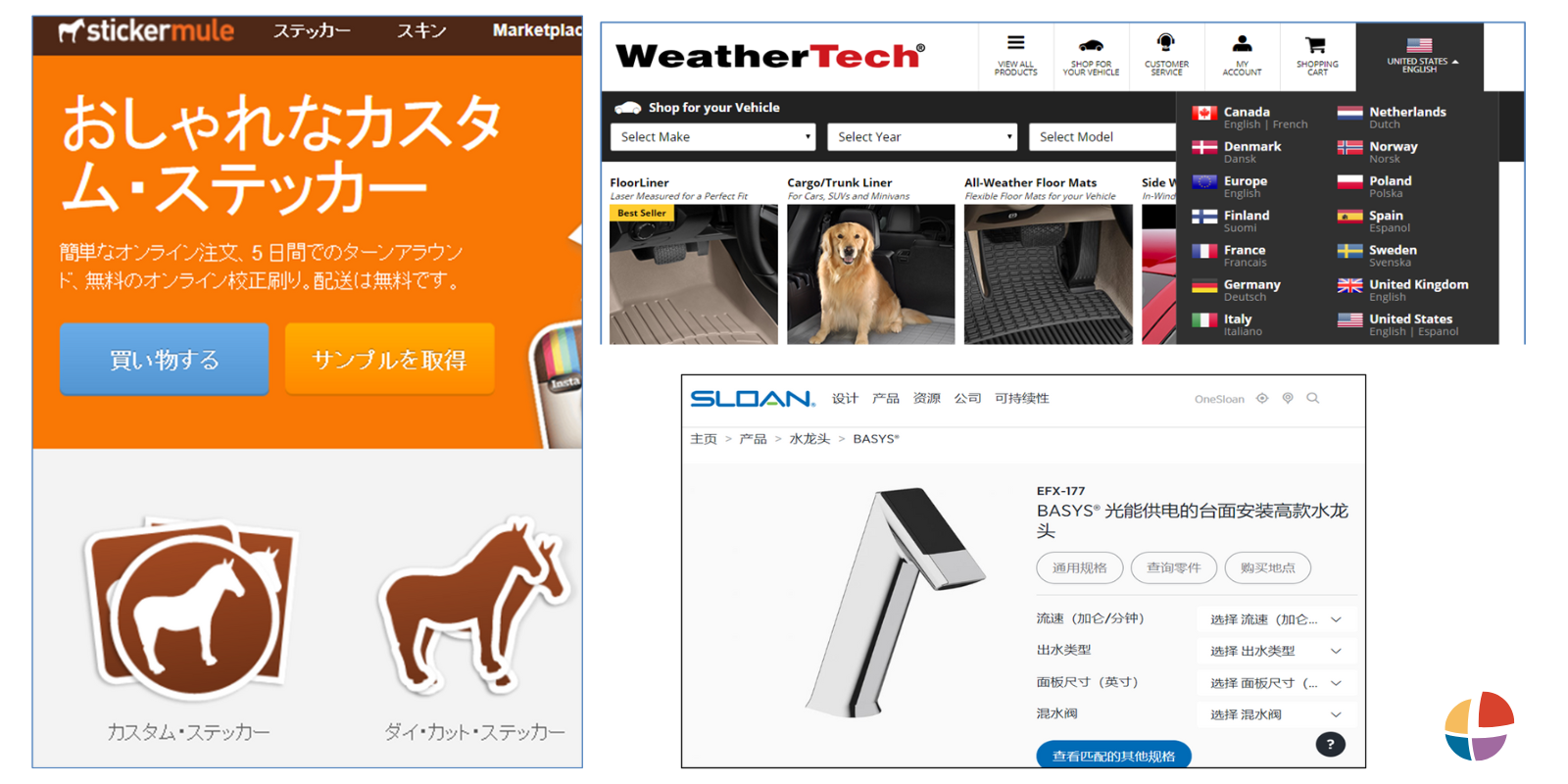
Launching in a global market? Many companies require human translation for content that is highly branded, nuanced or cultural content, or where restrictions require rewriting (page titles, meta descriptions, etc).
SEO (Search Engine Optimization)
While MT can generate translated content quickly, direct MT output often lacks the linguistic precision, keyword integration, and natural flow that search engines prefer. For effective SEO, translated content (whether human or MTPE) must:
- Incorporate Relevant Keywords: Research and integrate local keywords that target the specific audience in the target language. Direct translation of keywords may not be sufficient
- Be Grammatically Correct and Fluent: Search engines prioritize high-quality, readable content. Poorly translated MT output can negatively impact rankings.
- Have Proper Schema Markup: Implement `hreflang` tags to indicate language and regional targeting for search engines, preventing duplicate content issues and directing users to the correct language version.
GEO (Geographic/Local Search Optimization)
For businesses targeting specific regions or cities, even within the same language, translations need to be localized. MT alone won’t understand local dialects, colloquialisms, or region-specific search terms. Human post-editors are vital for:
- Adapting Local Terminology: Using terms common in a specific region (e.g., “lift” vs. “elevator”).
- Integrating Local Place Names and Landmarks: Relevant for local SEO.
- Ensuring Local Business Information is Accurate: Addresses, phone numbers, opening hours.
AEO (Answer Engine Optimization)
With the rise of voice search and featured snippets, getting quick, accurate answers from search results is key. MT content, if not carefully post-edited, can struggle with:
- Conciseness and Clarity: Answer engines favor direct, concise, and clearly structured content. Machine-translated output often struggles to maintain this level of clarity without human post-editing, resulting in awkward phrasing or redundancy. When creating multilingual content for SEO or AEO, every translated answer must be intentionally edited to read naturally and deliver quick, accurate value to the end user.
Ready to explore how a tailored translation strategy can benefit your business?
Contact Interpro today to discuss your specific translation needs and discover how our blend of advanced technology and human expertise can help you achieve your global objectives.
Explore services:
Translation • Document • eLearning • Video & Multimedia • Consulting
Category: Translation
Tags: About Interpro
Service: AI Translation

Don't forget to share this post!




Stay Updated with Interpro
Subscribe to our newsletter for the latest updates and insights in translation and localization.