

While AI tools are advancing rapidly, they can’t replace the cultural sensitivity, contextual understanding, and nuance that human-centered translation and localization provide. In this article, we explore why accurate, inclusive communication still requires a human touch and how organizations can bridge language gaps to create meaningful connections worldwide.
Bridging Language Gaps: A Human-Centered Approach to Translation and Localization
At Interpro, we believe that language is more than just words; it’s a bridge to understanding, inclusion, and impact. For over 30 years, we’ve helped organizations communicate across cultures through professional translation, localization, and interpreting services. Recently, we had the opportunity to share our insights during a webinar hosted by CSH, where we explored the fundamentals of translation and why a human-centred approach matters more than ever.
Don’t want to read the article? Watch Maria’s training on the topic!
Who We Are at Interpro
Interpro is not a tech company; we’re the people company. Based in Wheaton, Illinois, we specialize in translating content from English into a wide range of languages, with a focus on quality, accuracy, and cultural relevance. Our team includes experienced project managers, engineers, and linguists who are passionate about helping clients connect with diverse audiences.
We hold two ISO certifications: one for company-wide quality management and another specifically for translation quality. These standards reflect our commitment to excellence and consistency in every project we undertake.
Understanding the Core Services
Our services span a broad spectrum of content types:
- Documentation: From one-pagers to user manuals.
- E-learning: Computer-based training, voiceovers, and video localization.
- Interpreting: Real-time verbal communication for meetings, webinars, and events.
- Multilingual Desktop Publishing (DTP): Formatting translated materials to accommodate language-specific layout needs.
- Website and Software Localization: Ensuring digital content resonates with global users.
One of our most rewarding collaborations has been with CSH, where we’ve localized training materials into Armenian, Simplified and Traditional Chinese, and Polish. These efforts have made critical resources accessible to individuals with limited English proficiency, empowering them to engage more fully with supportive housing programs.
Understanding the distinctions between these services is key:
- Translation focuses on written content. Translators have time to research, refine grammar, and ensure clarity.
- Interpreting is real-time and verbal. It requires quick thinking, strong memory, and note-taking skills.
- Localization goes beyond translation. It adapts content to the cultural context of the target audience, making it feel native and natural.
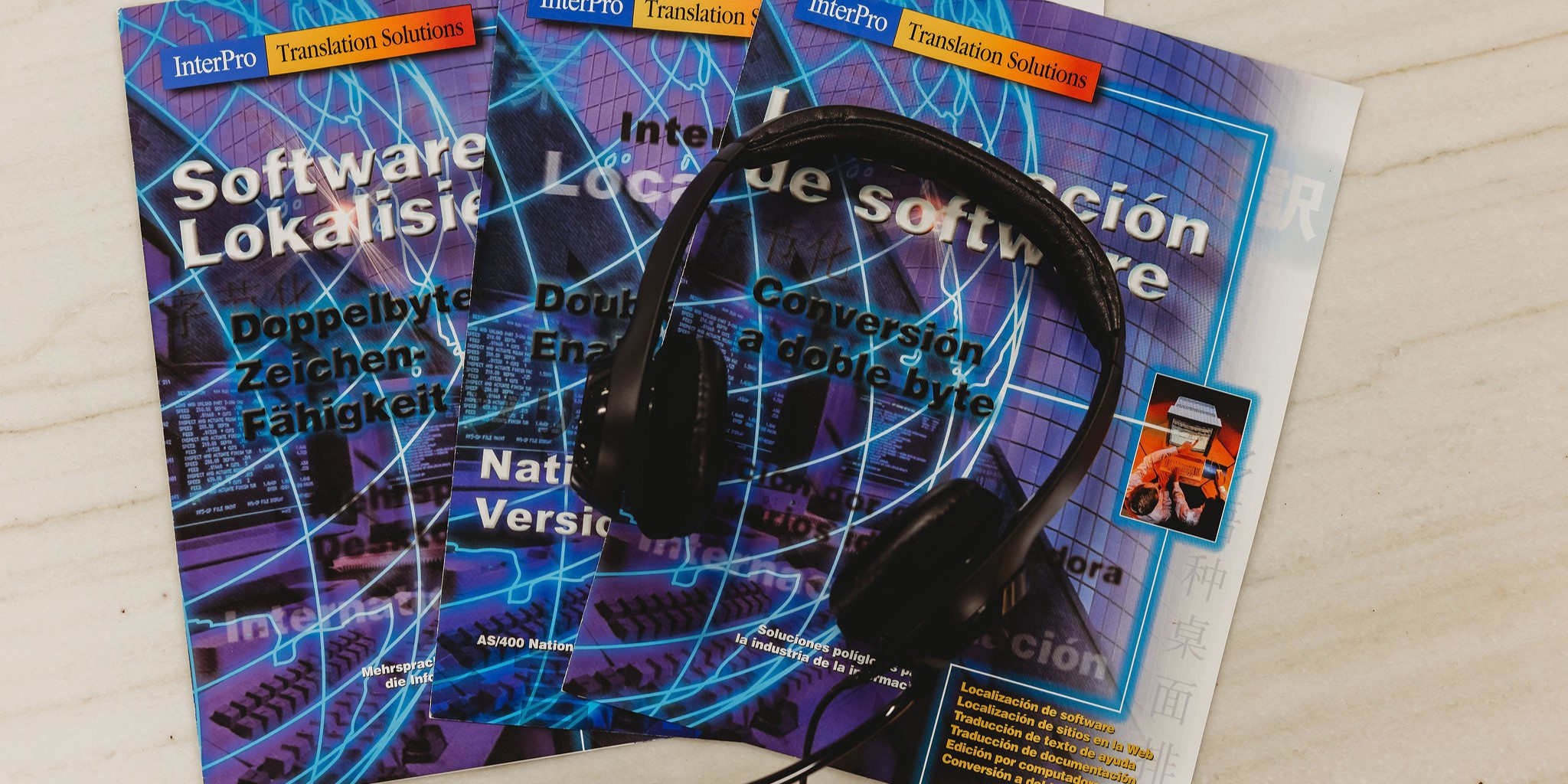
A collection of Interpro’s software localization brochures displayed in multiple languages, including German and Spanish.
Language Specific Nuance
For example, translating “Call 911” into Italian doesn’t convey the same urgency or functionality, because 911 is not Italy’s emergency number. In Italy, the correct number for emergency services is 112. Simply translating the phrase word-for-word could confuse users or even delay critical response times. Proper localization ensures that the message is not only linguistically accurate but also culturally and functionally appropriate, preserving the intent and effectiveness of the original content.
Similarly, visual elements like maps, icons, or images must reflect regional relevance to truly resonate with the target audience. For instance, a map showing U.S. states or landmarks may be meaningless or even alienating to users in Japan or Brazil. Replacing such visuals with region-specific imagery—like local landmarks, culturally familiar symbols, or even currency—helps users feel that the content was designed with their context in mind. This enhances user engagement, trust, and comprehension, which are key goals in localization.
Why Cultural Sensitivity Matters
Cultural sensitivity isn’t just a nice-to-have; it’s essential. It affects how information is received and understood. In supportive housing, for instance, understanding cultural norms around authority and communication can shape how professionals interact with clients. A family that avoids eye contact may be showing respect, not disinterest.
We encourage our clients to consider cultural nuances in every aspect of their communication. Whether it’s choosing respectful forms of address or adapting training materials, these details make a significant difference.
Challenges in the Field
Despite the growing awareness of language access, challenges persist:
- Budget Constraints: Translation is often an afterthought, squeezed into tight timelines and budgets.
- Misunderstandings: Requests for “universal Spanish” or “uniiversal Chinese” overlook regional differences that affect comprehension.
- AI Limitations: Tools like Google Translate or ChatGPT can be helpful for casual use, but they fall short in critical contexts.
We’ve seen AI mistranslate workplace greetings in Japanese as “You must retire,” when the intended meaning was “Thank you for your hard work.” These errors can be comical or harmful.
Where AI Translation Falls Short
AI struggles in four key areas:
- Cultural Context: Lacks understanding of cultural norms and idioms.
- Consistency: May translate the same term differently across a document.
- Nuance: Misses figurative language and emotional tone.
- Bias: Reinforces stereotypes, such as assuming a doctor is male or a nurse is female.
That’s why we advocate for a “Human in the Loop” approach. Professional translators and reviewers ensure accuracy, consistency, and cultural relevance. We use Translation Memories, style guides, and inclusive language checklists to maintain quality across projects.
Best Practices for Translation
Here are some principles we live by:
- Accuracy: Go beyond word-for-word translation to convey meaning.
- Cultural Sensitivity: Understand and respect cultural norms.
- Clarity: Keep language simple and aligned with the original tone.
- Professional Help: Know when to bring in experts, especially for legal, medical, or technical content.
We also encourage clients to involve subject matter experts in the review process. Language is preferential, and there are many ways to say the same thing; having a reviewer ensures the final product aligns with the intended message.
Real-World Examples of Localization
One of our favorite examples of localization in action comes from our work with Visit Orlando. Their visitor guides, distributed in airports and online, feature the same content but different cover images tailored to cultural preferences. For Chinese-speaking audiences, the cover highlights shopping malls, while for Spanish-speaking audiences, it emphasizes theme parks and family fun. These subtle changes make the content more relatable and engaging.
Another example involves a multilingual poster intended for release across different continents. To ensure cultural and geographic relevance, the globe image featured on the poster was adjusted based on the target audience: for the U.S. and Argentinian Spanish versions, the Americas were prominently displayed; for the Chinese version, the focus shifted to Asia. This allowed viewers to immediately recognize their own region, fostering a sense of inclusion and relevance.
These small but meaningful visual adjustments go a long way in enhancing the impact of translated materials. They show attention to detail and cultural sensitivity, which not only improves user engagement but also reinforces the message that the content was thoughtfully adapted, not just translated, for its intended audience.
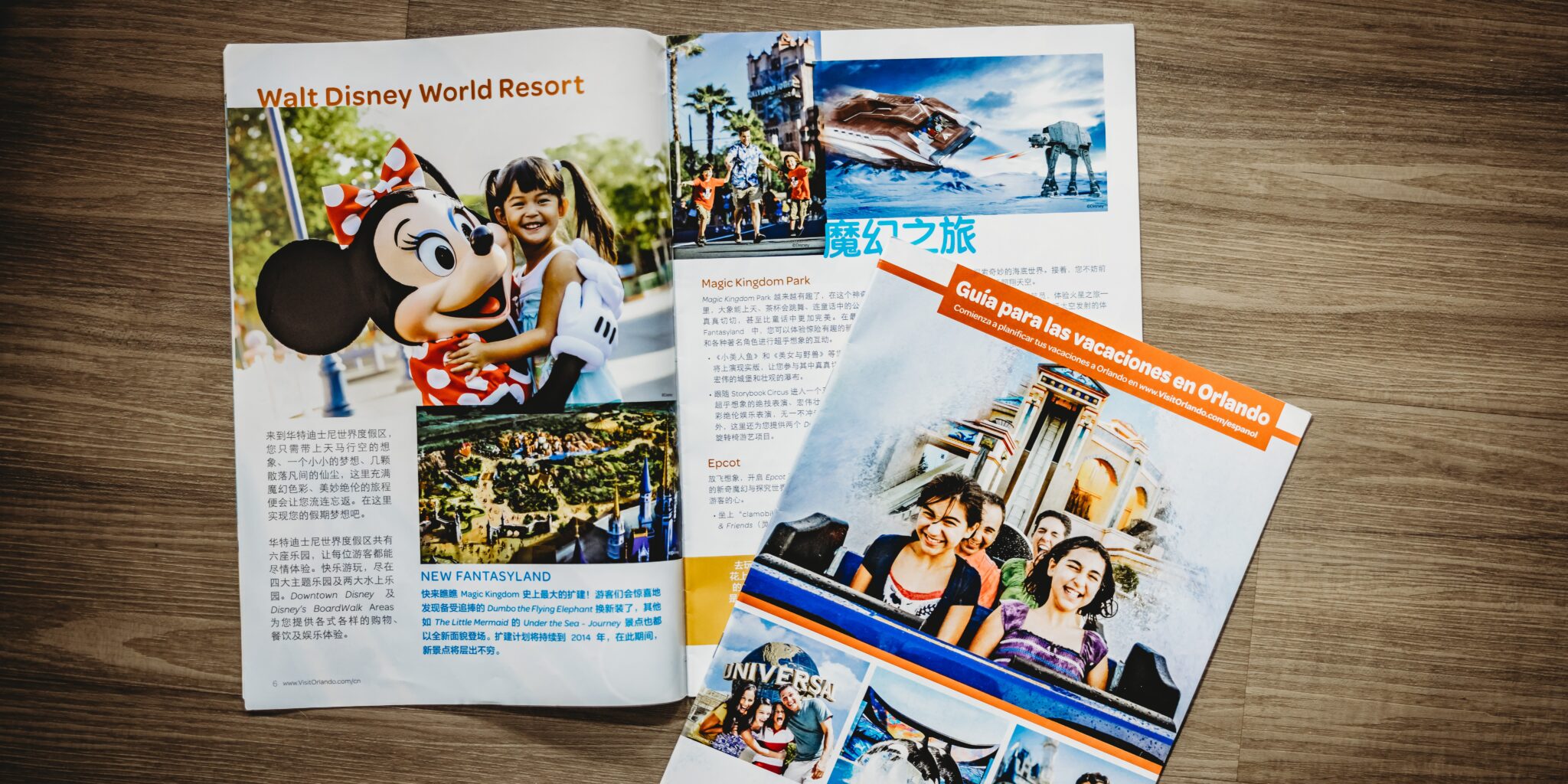
A side-by-side comparison of multilingual travel guides for Visit Orlando, featuring culturally tailored covers and localized content in Chinese and Spanish.
Planning for Success
We’re seeing more organizations build translation into their planning from the start, which leads to better outcomes and more inclusive communication. And when time or budget is tight, we recommend using AI only for non-critical content and always with human review.
If you’re in a time crunch and need to use tools like Google Translate or ChatGPT, have someone fluent in the language review the output. Our rule of thumb: if you can’t have it reviewed by a human, it might be better to leave it in English than risk a poor translation.
Final Thoughts
At Interpro, we’re proud to play a small part in a much larger mission: making information accessible, inclusive, and impactful. Language is a powerful tool, and when used thoughtfully, it can bridge gaps and build trust.
Whether you’re translating a training module, localizing a website, or preparing for a multilingual event, we’re here to help. Let’s work together to make your message resonate, no matter the language.
Explore Services
Consulting • Translation • eLearning • Video & Multimedia • Document
Category: Localization, Translation

Don't forget to share this post!




Stay Updated with Interpro
Subscribe to our newsletter for the latest updates and insights in translation and localization.