

Localizing an SEO strategy goes far beyond translating keywords. It involves adapting to linguistic nuances, cultural expectations, and user behaviors in each market. This blog outlines best practices for creating an international SEO approach that resonates locally and drives real search visibility.
How Keywords Change Across Languages and Regions
Translation of Core Keywords
Direct, “word-for-word” translation rarely captures the full intent or impact of keywords. A phrase like “running shoes” translates literally into “chaussures de course” in French or “zapatillas de correr” in Spanish, but these phrases may differ in popularity or regional resonance. Keyword translation must prioritize linguistic accuracy and local relevance.
Cultural Differences in Terminology
Terminology often reflects culture. A keyword like “vacation” in the U.S. becomes “holiday” in the UK. Both are correct yet culturally distinct. This applies to products, services, and even emotions expressed in search queries. Recognizing these nuances allows marketers to align their content with user expectations.
Search Volume and Keyword Popularity
High-ranking keywords in one language may be obscure in another. Using localized keyword tools is essential to identifying terms with real traction in your target market. A keyword with 10,000 monthly searches in English might have zero relevance when directly translated into Japanese or Russian.
Long-Tail Keyword Variation
Long-tail phrases are highly specific and more likely to convert, but they vary dramatically by language. In Spanish, for instance, a long-tail query for “best eco-friendly kids shoes for summer” requires restructuring to match natural Spanish phrasing, tone, and grammar. These differences aren’t just linguistic; they’re behavioral.
Synonyms, Slang, and Industry Jargon
Localized SEO strategies should keep regional slang and synonyms in mind. A UK-based user might search for “trainers,” while a US user explores “sneakers.” Similarly, localized industry jargon ensures B2B terms resonate within the local business context.
Alphabet and Character Adaptations
Languages like Chinese, Arabic, or Russian require unique scripts and character sets. Even within the Latin alphabet, diacritics in languages like French or Vietnamese affect search results. Accurate keyword rendering and indexing are vital to ensuring discoverability.
Keyword Density and Placement
Natural integration is key. A sentence that works in English might need restructuring in German or Korean, altering where and how often the keyword appears. SEO success depends on preserving readability and optimizing density based on language norms.
Trends, Seasonal Shifts, and Voice Search Variations
Local events, holidays, and even climate seasons influence keyword trends. What ranks during the U.S. “Back-to-School” season may not matter in Australia’s academic calendar. Voice search introduces another layer; local speech patterns and accents affect phrasing, especially in mobile-first regions.
Best Practices for Localizing an SEO Strategy
Conduct Thorough Market Research
Start by understanding each market’s cultural, linguistic, and digital landscape. Identify competitors, preferred search engines (e.g., Baidu in China, Yandex in Russia), and content expectations. Without this foundation, localization efforts risk missing the mark.
Perform Keyword Research and Localization
Use region-specific keyword tools like Google Keyword Planner, SEMrush, or Moz to find relevant terms. Work with native linguists to translate and adapt, not just convert, your keywords. Interpro’s glossary development ensures consistent terminology across all languages and markets.
Create Local, Culturally-Relevant Content
Cultural resonance drives clicks and conversions. Interpro has helped SEIU 775 Benefits Group adapt caregiver training content across 10+ languages with culturally-attuned messaging, ensuring materials resonate in each community. This isn’t just translation; it’s localization.
Optimize Technical SEO
Implement hreflang tags to signal language and region targeting to search engines. Enable geotargeting within tools like Google Search Console. Ensure URLs and meta descriptions are optimized for each language and country combination.
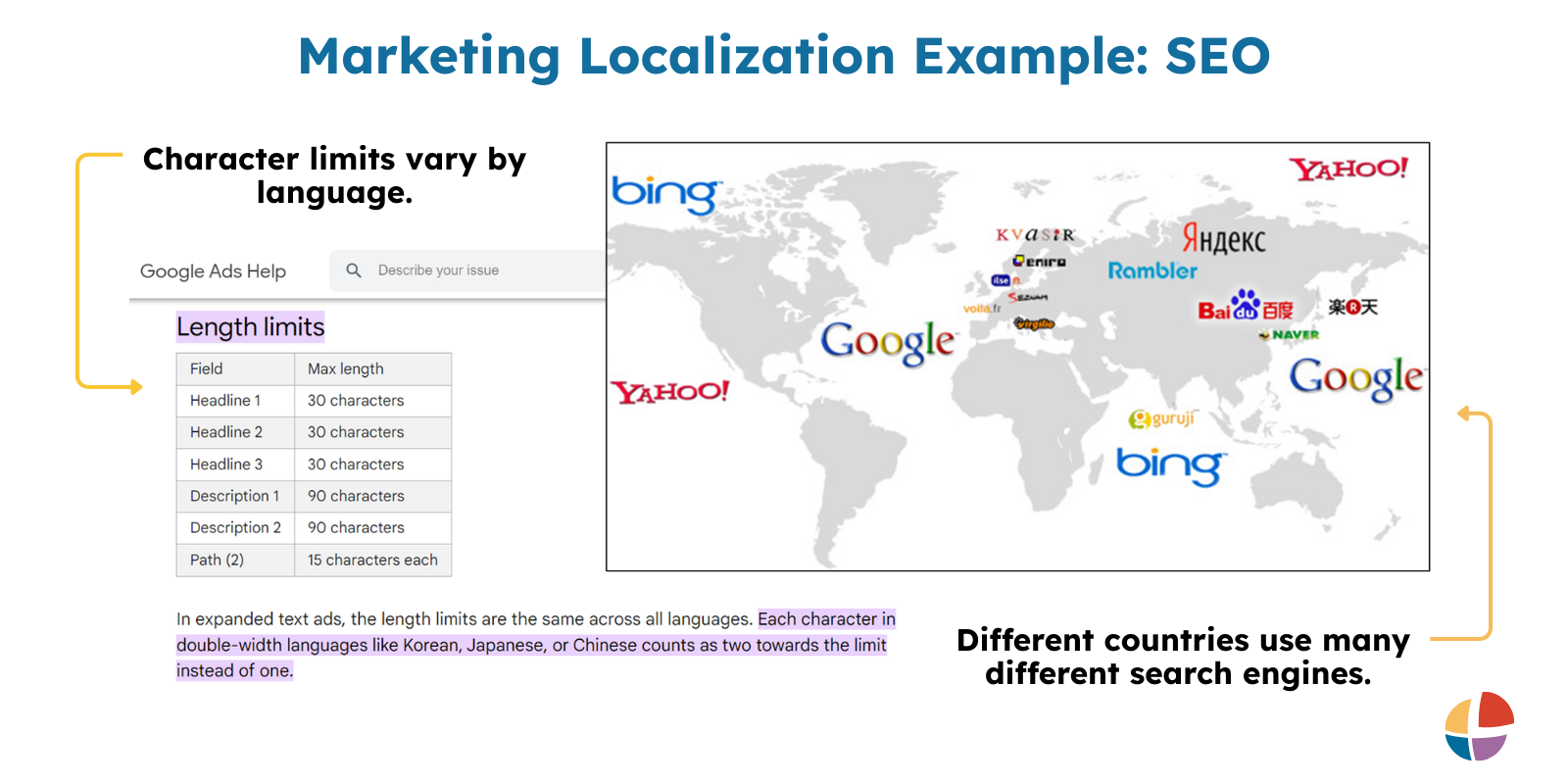
When localizing an SEO strategy, businesses must account for language-specific character limits, double-width characters, and regional search engine preferences to ensure campaigns perform effectively in every target market.
Ensure Mobile Responsiveness by Region
Mobile device use differs by region. In some markets, mobile-first is the only usage. Interpro collaborates with partners to test page load speeds, navigation, and usability across localized mobile devices, helping avoid user drop-off due to a poor experience.
Apply Local SEO Techniques
Claim and optimize local directory listings such as Google Business Profiles. Ensure NAP (Name, Address, Phone) consistency across platforms. These actions help localized content appear in regional search and map results.
Respect Cultural Sensitivity and Legal Compliance
Language reflects social norms. What’s humorous or persuasive in one market could be offensive in another. Local compliance, like GDPR (General Data Protection Regulation) in Europe or PDPA (Personal Data Protection Act) in Singapore, also affects data handling on translated pages. Interpro advises on cultural and legal nuances across markets.
Enhance Localized UX Through Testing
Testing ensures your content and layout work in every language. Interpro’s multilingual desktop publishing (DTP) services guarantee that visual hierarchies, navigation, and formatting align with local expectations. This is especially critical in right-to-left languages, like Arabic.
Use Multilingual SEO Techniques
Localized sitemaps, schema markups, and metadata support search engine indexing. Structured data tailored to each language-market pairing increases visibility in both standard and AI-driven search results.
Continually Optimize Based on Market Feedback
Localization isn’t one-and-done. Interpro’s consultative approach includes ongoing review and stakeholder feedback. For instance, our work with RISE Partnership has helped fine-tune messaging across healthcare training materials based on user insights and region-specific feedback.
Ready to make a global impact?
Localizing your SEO strategy means more than translating content; it’s about delivering authentic, effective digital experiences to users in every market. From keyword adaptation to technical execution, every detail matters.
Interpro Translation Solutions offers a proven, consultative approach to multilingual SEO. We work alongside your team to develop culturally-relevant, search-optimized content that drives engagement and growth across global markets.
Talk to us about building a global SEO strategy that resonates locally.
Category: Localization
Tags: About Interpro, Marketing
Service: Translation Services

Don't forget to share this post!



Stay Updated with Interpro
Subscribe to our newsletter for the latest updates and insights in translation and localization.